

What Is the Best Furniture for a Home Office in a Small Space? 9 Smart Choices
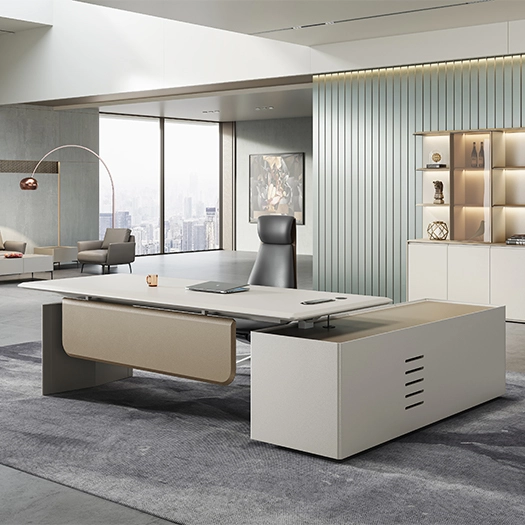
When selecting the right furniture for your home office it is crucial to begin by thinking about the room, and then selecting items from the catalogs that will work best within that space. A small home office requires products that maximize use of floor space, manage cables, stow office supplies, and support how one works.A great looking desk does not have to be the wrong choice for your home office, only if the chair hits the cabinet every time you stand up. In small rooms, furniture should do more than one thing.
GOJO develops modern office furniture around complete workspace planning rather than isolated pieces. Gojo offices follows a small-office approach focusing on optimal use of the available space whilst maintaining control of expenditure and flexibility in use of the space. The Gojo offices brand was established in 2016 when gojo offices began utilizing product development, testing, customization and project service skills as outlined in the Gojo offices company profile.
What Is the Best Furniture for a Home Office When Space Is Tight?
To give a correct answer for a room, three limits have to be considered: the usable width of the walls, the required work surface and the volume for storage. Measuring the room after discounting the space for doors and windows, for radiators and for a chair standing in the room is the starting point. A work surface of 1,600 mm looks correct on paper but proves to be too narrow in reality because a nearby drawer does not have enough clearance to be opened properly.
Furniture That Uses Space Twice
The most useful pieces combine functions. An attached cabinet replaces a separate pedestal, built-in wiring reduces cable clutter, and a low cabinet can hold a printer while storing paper below.
| Smart Choice | Main Space-Saving Benefit | Best Use |
|---|---|---|
| Compact executive desk | Combines work surface and storage | Dedicated home office |
| Sit-stand desk | Supports two working postures | Long workdays |
| Single workstation | Uses a narrow wall efficiently | One-person setup |
| Two-person workstation | Shares structure and cable routes | Couples or shared study |
| Vertical file cabinet | Uses wall height | Paper-heavy work |
| Integrated side cabinet | Replaces several small units | Device and file storage |
| Compact negotiation table | Handles meetings and short tasks | Client-facing rooms |
| Small side table | Adds a movable support surface | Printer or reference area |
| Desktop privacy screen | Creates separation without floor loss | Shared rooms |
Proportion Before Style
A compact office usually works better with one restrained finish. Light surfaces can make a tight room feel calmer, while darker wood gives a dedicated office more visual weight. Choose according to light, wall color, and daily use.
Which Desks and Workstations Fit a Small Room?
The desk is the largest decision in most home offices. You need enough depth for a monitor and keyboard, but extra width is not always useful. A large desk may become awkward beside a wardrobe or window.
Compact Executive Desks and Sit-Stand Options
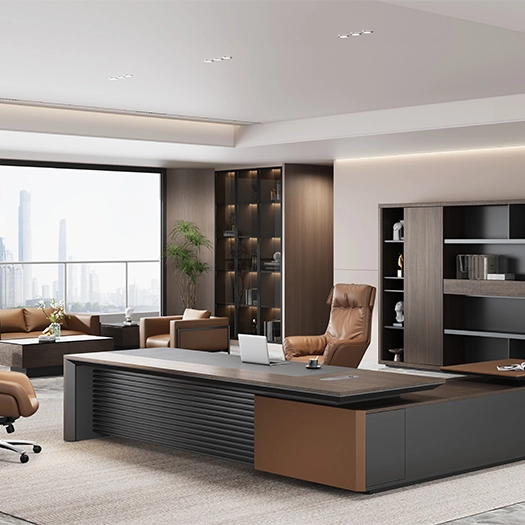
The RuiZe series offers several desk sizes. Compact models include 1,600 × 1,600 × 750 mm and 1,600 × 1,500 × 750 mm configurations. These fit a dedicated corner office better than the largest executive versions in the range.
RuiZe combines storage, power access, and cable routing within the desk structure. Some configurations include lifting functions and secure storage. A sit-stand option helps during long workdays, but it needs clear space above and below. Avoid fixed shelves overhead and loose cables in the lift path.
A compact executive desk is Choice 1. A sit-stand desk is Choice 2. Choose based on posture needs, not novelty.
Single and Two-Person Workstations
A single workstation is often the safest choice for a narrow room. RuiZe includes 1,200 × 600 × 750 mm and 1,400 × 600 × 750 mm formats. The 600 mm depth suits a laptop, compact monitor, and writing space, though large screens may need more room.
For two users, a shared workstation uses less structure than two unrelated desks. RuiZe offers formats around 1,200 × 1,200 mm and 1,400 × 1,200 mm. Shared cable routes keep the floor cleaner, while screens provide a boundary.
The single workstation is Choice 3. The two-person workstation is Choice 4. In a shared room, leave enough space behind both chairs so one person does not have to move whenever the other stands.
Which Storage and Supporting Pieces Prevent Clutter?
Small offices often fail because files, chargers, and personal items have nowhere to go. Keep daily items near the chair, weekly items in drawers, and archived material higher or farther away.
Vertical Cabinets and Integrated Side Storage
A vertical file cabinet is Choice 5. It gives you more storage without consuming a long section of wall. RuiZe includes cabinets in several widths and heights, with open areas for frequently used material and closed sections for private files.
An integrated side cabinet is Choice 6. It can support the desk, hold a computer unit, store files, hide cables, and provide locked space. This arrangement reduces the number of separate pieces and keeps the room quieter.
When comparing materials and fittings, check the published technical support information. GOJO’s wider quality system covers furniture mechanics, physical performance, formaldehyde, salt-spray, and climate testing. Its testing center uses 75 main pieces of equipment and covers more than 80 reliability items.
Small Tables and Desktop Screens
A compact negotiation table is Choice 7. It works for document reviews, short meetings, or tasks away from the main monitor. A large conference table is unnecessary in most homes.
A small side table is Choice 8. RuiZe includes 600 × 600 mm square tables and 1,200 × 600 mm long tables. These can support a printer, books, or active project files and can move when the room changes.
A desktop privacy screen is Choice 9. RuiZe lists 900 mm and 1,000 mm options. A screen gives a shared room visual order without adding a full-height partition. Keep it low enough to preserve daylight and conversation.
How Should You Choose Between RuiZe and RuiGe?
Both series include desks, cabinets, workstations, and supporting furniture, but they create different room effects. Choose according to your equipment, number of users, and desired separation from the rest of the home.
RuiZe for Equipment-Heavy Work
RuiZe suits users who need flexible layouts, several devices, secure storage, and organized wiring. Its range covers desks, shared stations, cabinets, side tables, and screens. Dark walnut and dark iron gray create a more formal business character.
This series also suits rooms that may change later. Related single and two-person formats support expansion without introducing a different furniture language.
RuiGe for a Lighter Interior
The RuiGe series uses Nordic eucalyptus with warm white surfaces, creating a lighter visual impression. The Compact executive range of desks comes in two sizes: 1,454mm wide x 1,200mm deep x 750mm high and 1,654mm wide x 1,200mm deep x 750mm high. In addition there are 800mm and 1,200mm high modular cabinets, a 600mm square table, 600mm x 600mm, and a 1,200mm wide x 700mm deep long table, 1,200mm x 700mm.
RuiGe works well in bedrooms, bright studies, and rooms where office furniture should not dominate. Its desks include cable organization, power access, drawers, and secure storage. Modular cabinets let you add storage gradually.
Conclusion
When deciding what is the best furniture for a home office, choose proportion, storage, and cable control before decorative impact. A compact desk, vertical cabinet, integrated side unit, and one movable support table will serve most small rooms better than a large matching set. RuiZe fits technology-heavy or shared work, while RuiGe creates a lighter, more residential mood. Before buying, mark each footprint on the floor and test the chair path, door swing, and cabinet access.
FAQ
Q: What is the best furniture for a home office in a very small room?
A: Start with a 1,200 to 1,600 mm desk, integrated storage, and one vertical cabinet. Add only pieces that solve a clear daily need.
Q: Is a 600 mm-deep desk large enough for remote work?
A: It is usually enough for a laptop or compact monitor setup. Large displays, monitor arms, and drawing equipment may require more depth.
Q: Should a small office use light or dark furniture?
A: Light furniture reduces visual weight, while dark furniture gives a stronger business feel. Room lighting and wall color matter more than fashion.
Q: Is a two-person workstation better than two separate desks?
A: It often saves space because both users share the frame, storage layout, and cable routes. Separate desks give more freedom when equipment differs.
Q: Where can product dimensions or project details be confirmed?
A: Product pages provide series specifications, while formal project questions can be checked through the company’s contact information.


