

Top 7 Leather Office Chair Features Corporate Buyers Should Compare in 2026
Buying a leather office chair for one person is largely a matter of fit. Buying hundreds for a corporate office is a different job. You need consistent materials, practical adjustments, stable mechanisms, and parts that will still perform after years of daily movement. A chair that feels soft during a five-minute trial can become uncomfortable by late afternoon. Many purchasing mistakes begin in that gap.
GOJO was established as a high-end business office furniture brand in 2016, while its wider manufacturing base dates to 2004. Its work covers design, material selection, production, testing, and project service. Its cloth and leather office chair range is a useful starting point, but every project still needs a clear feature comparison.
Which Features Support Comfort Across a Mixed Workforce?
One chair rarely fits every employee equally well. Height, body weight, leg length, desk setup, and daily sitting time all change what feels comfortable. Before comparing surface style, check the two areas that carry most of the body: the backrest and the seat.
1. Adjustable Support in a Leather Office Chair
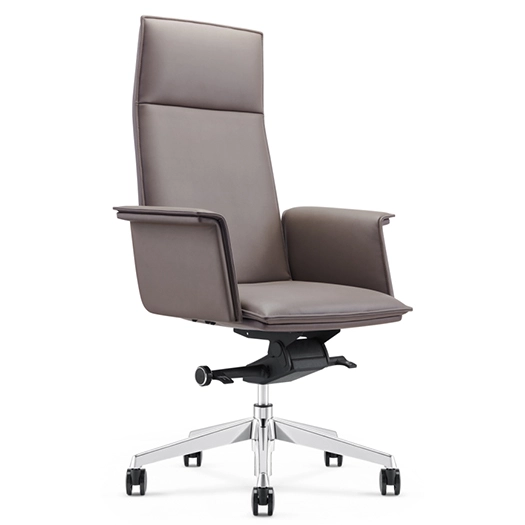
Back support should follow the natural curve of the lower spine without pushing the user too far forward. Compare lumbar position, support depth, backrest height, and shoulder contact. A fixed shaped back may suit assigned executive seating, while adjustable support is often more practical for shared workstations.
Testing should include people of different heights, not only the purchasing manager. Ask whether the support stays in place during upright work and reclined sitting. A high back can look impressive, yet its shape matters more than its height. If the curve meets the wrong part of the back, extra padding will not solve the problem.
2. Seat Depth, Cushion Density, and Waterfall Edges
Seat depth should support the thighs without pressing behind the knees. The front edge should feel rounded, and the cushion should spread pressure without collapsing. Deep seats may suit taller users but leave shorter employees sitting away from the backrest.
Foam is easy to overlook because a new cushion usually feels good. Ask for its specifications and durability results, then check how quickly it recovers after pressure. Seat width also matters when one model will serve a large workforce. Sometimes two seat sizes make more sense than forcing one size across every department.
| Feature | What You Should Compare | Risk if Ignored |
|---|---|---|
| Back support | Position, depth, and shape | Poor spinal contact |
| Seat construction | Depth, width, edge, and foam recovery | Pressure or early sagging |
| Leather specification | Grade, thickness, and coverage | Uneven wear or unclear value |
| Surface performance | Abrasion, flexing, colorfastness, and cleaning | Cracking, fading, or staining |
| Chair controls | Height, tilt, tension, and locking | Low user adoption |
| Structural parts | Base, lift, joints, and casters | Wobble, noise, or failure |
| Quality evidence | Tests, warranty, and batch controls | Higher lifecycle cost |
How Should Buyers Compare Leather and Upholstery Quality?
On a leather office chair, the material description must go beyond color and appearance. Leather type, finish, backing, stitching, foam, and coverage all affect price and service life. GOJO’s company background also shows its focus on commercial spaces, where batch consistency carries more weight than one attractive sample.
3. Declared Leather Grade and Surface Coverage
Request a written material schedule stating the leather type, thickness range, finish, color reference, and exact coverage. Some chairs use leather on all upholstered surfaces. Others use it only where the body touches the seat and back, with a matched material elsewhere. Neither method is automatically wrong, but the quotation should make the difference clear.
Check several samples side by side. Natural grain variation is normal, but strong shifts in shade, gloss, or texture can make a boardroom look patched together. Approved swatches should become part of the order record. Sample approval without written coverage details leaves too much room for disagreement later.
4. Abrasion Resistance and Easy-Care Upholstery
Wear usually appears first at the seat front, outer backrest edges, seams, and arm contact points. Ask for results covering abrasion, flexing, colorfastness, seam strength, and adhesion between upholstery layers where relevant. A finish that tolerates routine wiping may be more useful than a delicate surface that needs specialist care.
Look closely at stitching around curves. Tight radii place more strain on leather and thread, especially when users slide into the chair. This ordinary detail often says more about future wear than a polished product photograph.
Which Mechanisms and Components Protect Safety and Usability?
Comfort features have little value if their controls loosen or become awkward. Height adjustment, recline, arm movement, the lift, base, and casters form one working system. Review them together rather than as unrelated lines on a specification sheet.
5. Synchronized Tilt and Tension Adjustment
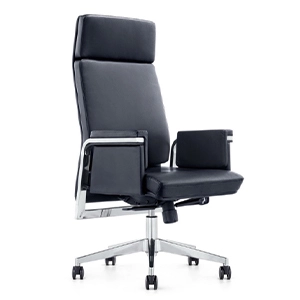
A leather office chair with several levers is not necessarily easier to use. Compare how quickly a seated user can find and operate each control. Basic checks include height range, tilt tension, recline angle, lock positions, armrest movement, and any seat-depth adjustment offered on the selected model.
Test the recline with users of different weights. The backrest should move smoothly, hold its position, and return without a sudden push. Controls should not pinch fingers or require excessive force. Clear labels help in shared offices because unused adjustments provide no practical benefit.
6. Load-Bearing Base, Gas Lift, and Quiet Casters
The base of a leather office chair carries repeated loads from sitting, turning, reclining, and rolling. Ask for the rated load plus relevant static and cycle test records. Check the gas lift, base material, wheel attachment, arm joints, and fasteners. Wobble in a new sample usually grows more noticeable with use.
Caster choice should match the floor. Carpet, timber, tile, and resilient flooring create different rolling resistance and noise. Quiet wheels can make a real difference in meeting rooms and open offices. Also check whether common wear parts can be replaced without discarding the whole chair.
What Evidence Supports Long-Term Value and a Better Buying Decision?
A purchase decision needs evidence beyond the first sample. Testing capacity, approved materials, production checks, warranty scope, and spare-part arrangements help you judge whether the delivered batch will match the chair that won the order.
7. Verified Testing, Warranty, and Project Customization
When comparing a leather office chair, review the supplier’s testing system as carefully as the upholstery. GOJO’s published technical support information states that its associated testing center was established in 2013. It handles raw materials and completed furniture, including leather, foam, hardware, chairs, cabinets, and desks.
| Published Quality-Control Fact | Verified Figure |
|---|---|
| Testing center area | Approximately 500 square meters |
| Main testing devices | 75 |
| Equipment value | More than RMB 6 million |
| Reliability, physical, and chemical test items | More than 80 |
| Laboratory management basis | ISO/IEC 17025 |
These figures matter because a corporate project may contain units from several production batches. Your order file should include approved samples, chair dimensions, functions, load requirements, packaging rules, inspection points, warranty terms, and replacement-part arrangements. Color or finish customization should be recorded with physical samples, not screen images.
The right leather office chair balances body support, durable upholstery, simple controls, stable components, and documented quality checks. Price matters, but a low unit cost becomes expensive when cushions sag, casters become noisy, or batches do not match. A seven-point comparison gives you a firmer basis for judging comfort, appearance, and cost across the chair’s working life.
FAQ
Q1: What should you check first when buying a leather office chair?
A: Start with user fit. Check seat depth, back support, height range, and control access before comparing color or decorative details.
Q2: Is softer cushioning always better for long working hours?
A: No. Very soft foam may feel comfortable at first but can compress too far. Balanced support and good recovery are more useful during a full workday.
Q3: How can you compare leather quality between suppliers?
A: Request the leather type, thickness, finish, coverage area, approved swatch, and relevant abrasion, flexing, and colorfastness results.
Q4: Why should caster type be included in the specification?
A: Floor type changes rolling resistance, noise, and surface wear. The selected caster should suit the actual carpet, timber, tile, or resilient floor.
Q5: What information should be recorded before a bulk chair order?
A: Record dimensions, materials, functions, rated load, test evidence, approved colors, inspection rules, warranty scope, and spare parts. GOJO lists its project communication details on a separate contact page, keeping them distinct from product specifications.


