

White Office Chair Materials Compared: Mesh vs Fabric vs PU Leather
A white office chair can brighten a workstation and open up a compact office. Yet white exposes dust, denim transfer, food marks, and uneven aging faster than dark upholstery. Material choice affects more than appearance.
Mesh, fabric, and PU leather respond differently to heat, friction, spills, and cleaning products. You need to compare airflow, touch, maintenance, traffic, and room style. This guide connects those differences with practical choices for task, meeting, and executive seating.
Which White Office Chair Material Performs Best?
No upholstery wins in every office. Mesh suits long sessions in warm rooms. Fabric feels softer and less formal. PU leather offers a smooth surface that is quick to wipe after minor spills. Build your shortlist around use, climate, and cleaning conditions.
Core Performance Differences at a Glance
This comparison shows typical category behavior. Actual performance depends on fiber type, coating quality, construction, and cleaning habits.
| Factor | Mesh | Fabric | PU Leather |
|---|---|---|---|
| Air movement | High through an open weave | Moderate and dependent on weave | Low through the coated surface |
| Feel | Responsive, with less surface padding | Soft, warm, and textured | Smooth, padded, and more formal |
| Common white-surface issue | Dust lodged in the weave | Absorbed spills and visible water rings | Dye transfer, yellowing, or coating wear |
| Routine care | Vacuum or soft-brush cleaning | Vacuuming plus careful spot cleaning | Wiping with a soft damp cloth |
| Typical placement | Open workstations and task seating | Private offices and collaborative rooms | Executive, conference, and reception areas |
These are material differences, not quality grades. Well-tensioned mesh can outlast a weak coating, while dense commercial fabric can beat a loose textile. White reveals the gap along edges, stitching, and contact areas.
Material-Specific Strengths and Trade-Offs
Mesh releases back heat and gives a chair a lighter profile. It suits long sitting periods and warm rooms. Check back tension, edge support, weave density, and dust removal. Deep white mesh can look gray if cleaners only wipe the frame.
Fabric feels warm and comfortable, but it absorbs liquid more readily. Coffee, ink, skin oil, and cleaning moisture may leave a patch after the original stain disappears. For shared seating, ask about stain treatment, colorfastness, abrasion resistance, and replacement covers.
PU leather usually has a textile backing and polyurethane surface. The coating delays liquid penetration, which helps in boardrooms and visitor areas. Heat, humidity, sweat, ultraviolet light, denim dye, and unsuitable cleaners can still affect the finish. The specification matters more than the “PU” label.
How Do White Chair Materials Age and Stay Clean?
A white office chair can change quickly in an active workplace. The front edge receives clothing friction, armrests collect skin oil, and the upper back picks up hair products. A chair beside a sunny window may age differently from one deeper in the room. Cleaning should match these contact patterns.
Daily Soil and Color-Transfer Risks
Dry dust enters mesh and becomes harder to remove after moisture binds it to the fibers. A soft upholstery vacuum tool usually works better than a wet cloth.
Liquid can travel below a fabric face. Blot rather than rub, and test cleaner in a hidden area. Excess water spreads soil and leaves rings. That small detail explains why a heavily scrubbed seat sometimes looks worse the next morning.
Smooth PU is easier to wipe, yet dark trousers can transfer dye through heat and friction. Prompt cleaning helps, but strong solvents may remove gloss or weaken the coating. Follow instructions for the exact upholstery.
Long-Term Wear and Material-Specific Care
Established in 2016, GOJO focuses on high-end business furniture, material selection, craftsmanship, and coordinated office spaces. Supplied company information also describes in-house testing resources for chairs and upholstery.
| Supplied Company Fact | Reported Figure | Relevance to Chair Buyers |
|---|---|---|
| Major production bases | 8 | Supports coordinated commercial projects |
| Total production footprint | About 300,000 m² | Indicates broad manufacturing capacity |
| Quality testing center | About 500 m² | Provides a dedicated setting for material and product checks |
| Main testing devices | 75 | Covers several physical and chemical test categories |
| Reliability and physicochemical test items | More than 80 | Includes materials and completed furniture |
The reported test scope covers leather, foam, hardware, chemical materials, and finished chairs. Laboratory management follows ISO/IEC 17025 requirements, and the center is described as CNAS-accredited. Buyers should connect that capability with the order specification, including abrasion, colorfastness, coating durability, and foam performance.
For maintenance, remove dry dust before adding moisture. Check cleaner compatibility, never soak fabric or mesh, and avoid bleach or harsh solvents on PU leather. Large offices should record cleaner dilution and tools so every floor follows the same method.
Which Material Fits Each Office Environment?
The room often gives a clearer answer than the label. Task chairs need airflow, guest chairs need fast cleaning, and executive seating must suit the surrounding furniture.
Workstations and Collaborative Areas Favor Practicality
For a white office chair used all day, mesh is a practical starting point in warm climates. It limits heat buildup and keeps workstation rows visually light. Fabric suits private offices or short collaborative sessions where softness matters more than fast cleaning.
Shared rooms need stricter planning. A training chair used by twelve people has a different soil load from one assigned to an employee. Review food rules, cleaning frequency, replacement access, and downtime. When comparing an office chair collection, also ask whether the same white finish can be reproduced later.
Executive and Meeting Areas Favor Refined Upholstery
Smooth upholstery fits executive offices and boardrooms because it supports fuller padding and tailored stitching. White paired with wood looks warm and formal, while polished metal produces a sharper contemporary effect.
The trade-off is lower breathability and visible dye transfer. That may be reasonable for short meetings. For an eight-hour workstation, seat depth, foam resilience, recline support, and heat comfort matter as much as the finish.
How Should Buyers Choose a GOJO White Office Chair?
Turn appearance into measurable questions: what is the material, how will the chair be used, which cleaner is allowed, and what test evidence applies? “White leather chair” alone is an incomplete specification.
A Five-Point Material Selection Checklist
First, request the upholstery composition, backing, coating, and color reference. Second, ask for abrasion, colorfastness, hydrolysis, and cleaner-compatibility information. Third, view a swatch in daylight and office lighting. Fourth, check foam, stitching, arm-contact surfaces, recline, and base construction. Fifth, approve and retain a sample before bulk production.
White displayed on a monitor may look cream, blue-white, or gray in the room. For future replenishment, record the approved color code and batch tolerance. Technical questions and sample details belong in the project inquiry sent through the contact page.
GOJO Options for Executive White Seating
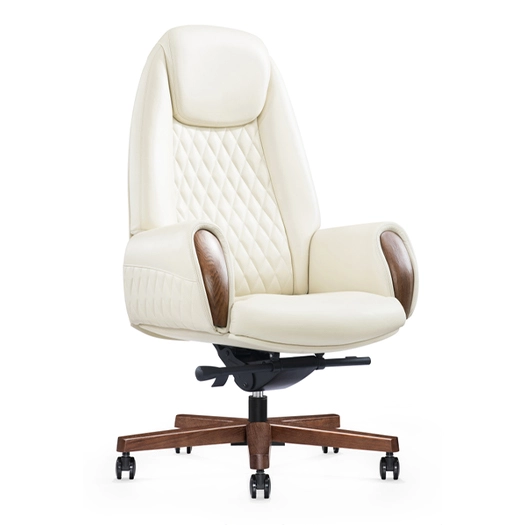
Model 1741921732369 chair has a thick high back, diamond-stitched center panel, padded arms with wood-tone inserts, and a matching five-star base. Its substantial character suits executive offices, formal reception rooms, and private meeting areas with wood furniture.
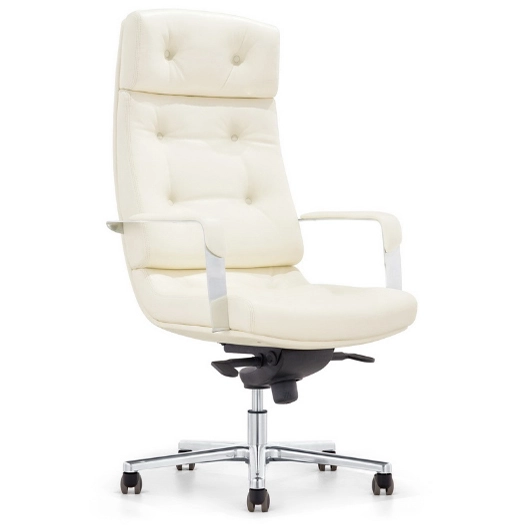
Model 1741921719968 chair has a button-tufted back, open metal-finished arms, and polished base. Its lighter look suits contemporary management offices and conference rooms.
The public pages show each design but not the precise upholstery composition. Do not call either chair PU leather without written confirmation. Verify the surface, care instructions, and whether test records cover the selected white option.
The best white office chair suits its room, climate, traffic, and cleaning routine. Mesh favors airflow, fabric offers a softer touch, and PU leather gives a neat formal surface. Choose with verified construction details, not color alone.
FAQ
Q: Which white office chair material is easiest to clean?
A: PU leather is usually easiest after minor spills because liquid does not enter an open weave immediately. Use a compatible mild cleaner; strong solvents can damage the coating.
Q: Does white mesh become gray over time?
A: It can when dust settles inside the weave. Regular soft-brush vacuuming works better than occasional wet wiping alone.
Q: Is fabric suitable for busy shared offices?
A: Yes, if it has suitable abrasion and stain performance and spills are treated quickly. Dark liquids and excess cleaning water show clearly on pale fabric.
Q: Can alcohol be used on PU leather?
A: Only when the upholstery supplier permits it. Repeated use of concentrated alcohol may dull, dry, or weaken some polyurethane finishes.
Q: What should buyers confirm before ordering either GOJO model?
A: Confirm upholstery, color sample, cleaning instructions, mechanism specifications, test evidence, quantity, and replacement availability.


